
Learning to Photograph With Restraint
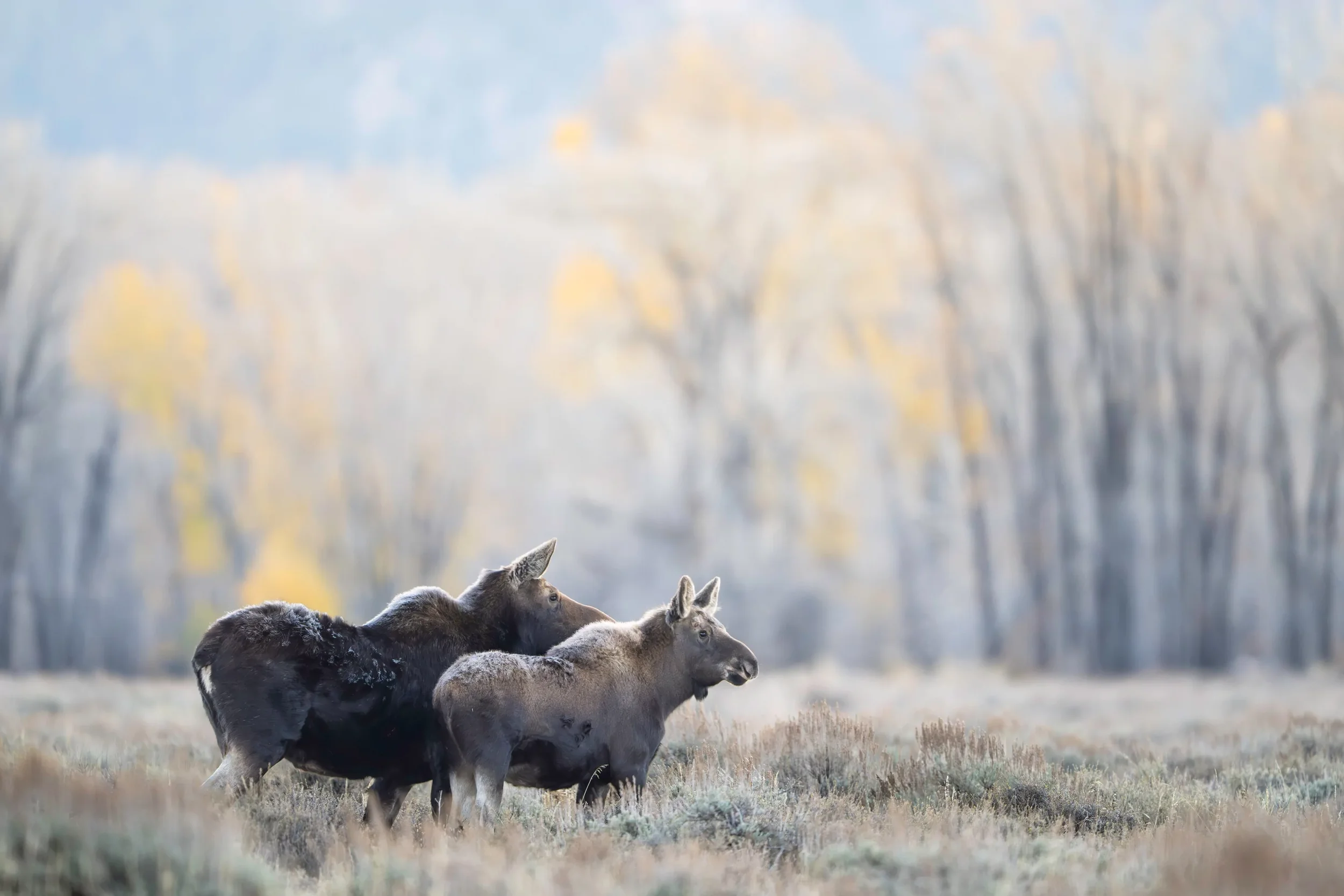
Moose and Calf in Grand Teton National Park.
There is a kind of photograph that announces itself immediately.
It may be dramatic, colorful, full of action, or technically impressive in an obvious way. Those photographs have their place. Wildlife and nature photography often rewards the spectacular: the peak moment, the dramatic gesture, the rare behavior, the saturated sky, the animal perfectly isolated against a clean background.
But over time, I have found myself drawn less to the obvious image and more to the quiet one.
For me, learning to photograph with restraint has meant learning to look for moments that are not necessarily spectacular, but still feel compelling, meaningful, and true. It is not about making an image feel empty or minimal for its own sake. It is about reducing a scene until what remains carries the feeling of the moment.
In that sense, photography has become more of a reductive act for me. The question is no longer simply, “What can I include?” It is, “What can I leave out?”
From Documenting to Creating
Like many photographers, I started by trying to document what I saw.
If the subject was interesting, I photographed it. If the behavior was unusual, I tried to capture it. If the image was sharp and the moment was clear, I often felt like I had succeeded.
Those things still matter. Sharpness, timing, fieldcraft, and technical control all have a place. But they are no longer the whole measure of success for me.
Over time, I began to realize that my strongest photographs often contained less. Less visual noise. Less explanation. Less insistence. The images that stayed with me were not always the ones that showed the most dramatic behavior. They were often the ones that held a quieter kind of emotional weight.
That shift changed the way I work.
Today, I think less about capturing an image and more about making one. That difference may seem subtle, but for me it is significant. Capturing is reactive. Making requires intention. It asks me to consider composition, visual weight, atmosphere, background, foreground, light, and the way all of those elements work together to create a feeling.
What Restraint Looks Like in the Field
In the field, restraint often begins with patience.
Sometimes wildlife moments happen quickly and instinct takes over. You react, frame the scene as best you can, and hope you have done enough. But when there is time, I try to move around the edges of a scene visually before I ever press the shutter.
I look at the background. I look at the foreground. I think about what belongs in the frame and what distracts from it. I consider whether the subject needs more space, less space, more shadow, or a simpler environment around it.
Just as importantly, I think about what my presence may do to the scene.
I tend to avoid crowded situations, especially in national parks where wildlife encounters can attract large numbers of people. I do not avoid those scenes entirely, but I prefer quieter moments when the animal is not being pressured or altered by human attention. That is one reason restraint connects so closely to ethical wildlife photography for me. The quieter moments often place less stress on the subject, and they allow the image to feel more honest.
The photograph is not just about what I saw. It is also about how I chose to be there.
Choosing the Quieter Frame
There are many times when I intentionally choose the quieter photograph over the more dramatic one.
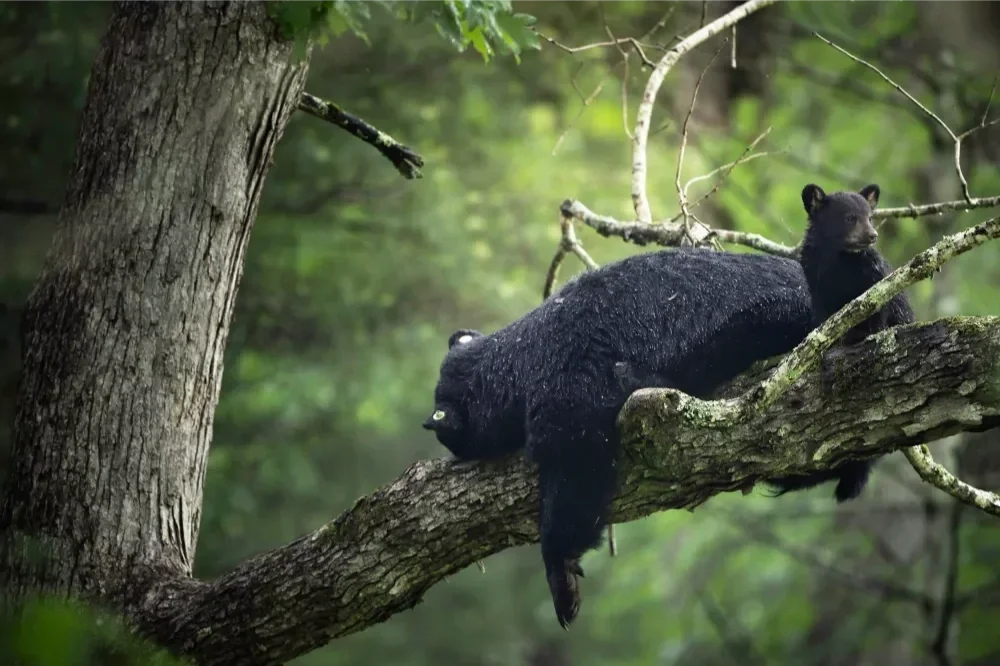
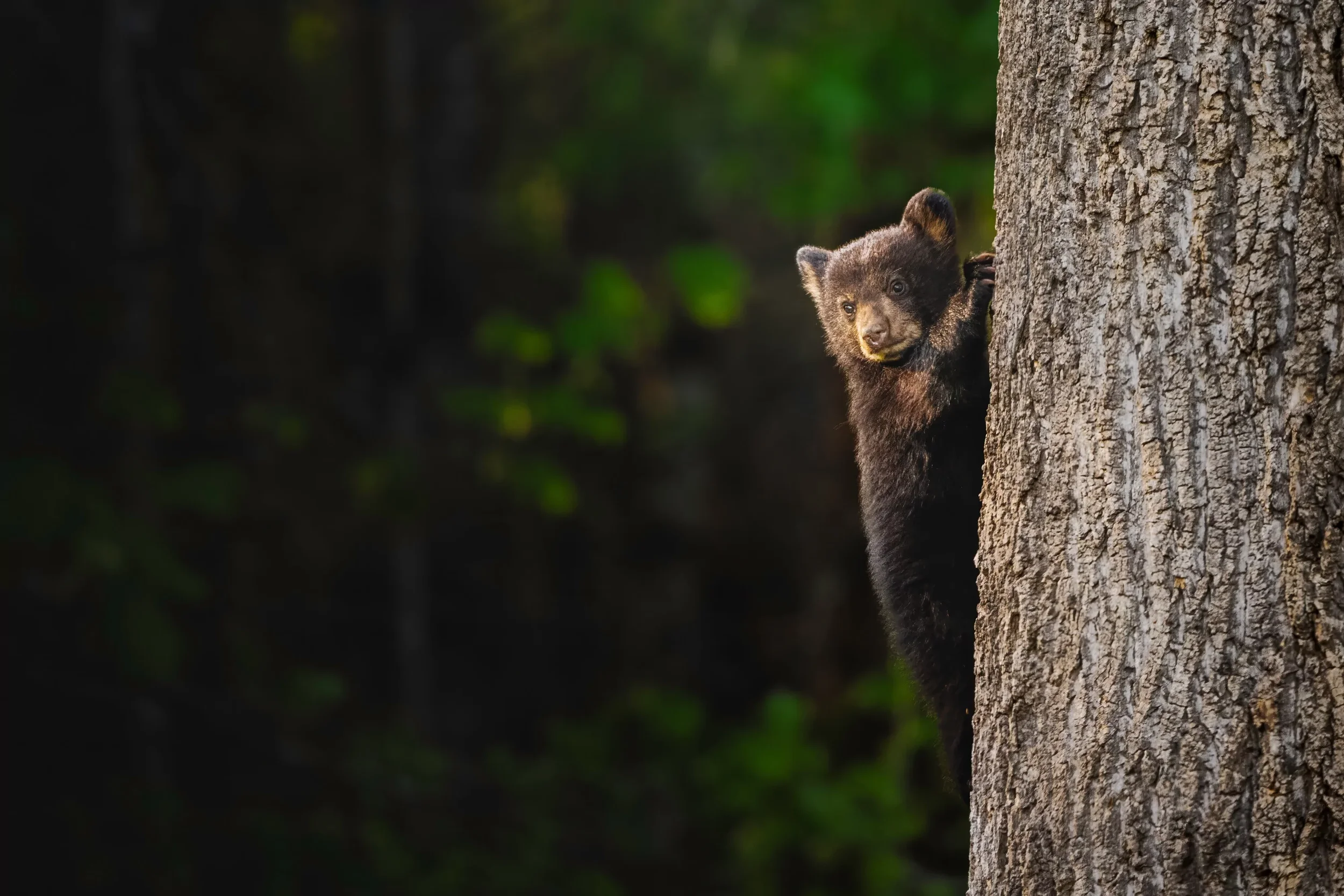
When I photographed Tiny Guardian, for example, I made hundreds of frames. There were more obvious images from that sequence: clearer interactions, stronger gestures, more instantly readable mother-and-cub behavior. Many of those photographs were good. But the image I ultimately chose was less obvious.
It held more emotion.
The quieter frame had a feeling that the more dramatic frames did not. It did not explain everything at once. It asked the viewer to stay with it a little longer. For me, that is often where the photograph begins to become more than a record of behavior. It becomes a mood, a memory, or a small emotional encounter.
That is the kind of image I am most interested in making.
Weather, Atmosphere, and Softness
Weather has become one of the most important elements in my work.
Rain, fog, mist, shadow, muted color, and soft light can all simplify a scene. They reduce contrast. They quiet the background. They allow the subject to emerge gently rather than shout from the frame.
I enjoy working in rain and fog for that reason. Weather can create a kind of natural restraint. It removes some of the literalness from a scene and replaces it with atmosphere. The photograph becomes less about showing every detail and more about holding onto the feeling of being there.
This is one reason I am drawn to painterly images. As a child, I loved art, especially Renaissance painting. As I have gotten older, I have found myself increasingly inspired by Japanese hanga and shin-hanga prints, along with Impressionist painting. I am not trying to recreate those styles in my photographs, but they have influenced how I think about composition and atmosphere.
Japanese woodblock prints often use simplified compositions and strong subject relationships to create mood. Impressionist paintings often use light and atmosphere to suggest feeling without needing every detail to be fully resolved. Those ideas have changed the way I look through the camera.
They have helped me understand that a photograph does not need to say everything to feel complete.
The Discipline of Leaving Things Out
One of the hardest parts of restraint is trusting that enough is enough.
There is always the temptation to add more: more contrast, more saturation, more clarity, more drama, more obvious storytelling. In editing, especially, it can be easy to push an image past the point where it still feels natural.
I try to stop just before the image feels “perfect.” That may sound counterintuitive, but it is an important part of my process. If I keep editing until every element is polished and every imperfection is removed, the photograph can lose the quality that made it feel honest in the first place.
My goal is not to transform the scene into something it was not. I do not add major elements or use artificial intelligence to significantly change an image. I want the final photograph to remain close to the original experience, even if the edit helps guide the viewer toward what I felt in the moment.
Restraint in editing is not about doing nothing. It is about knowing when to stop.
A Turning Point
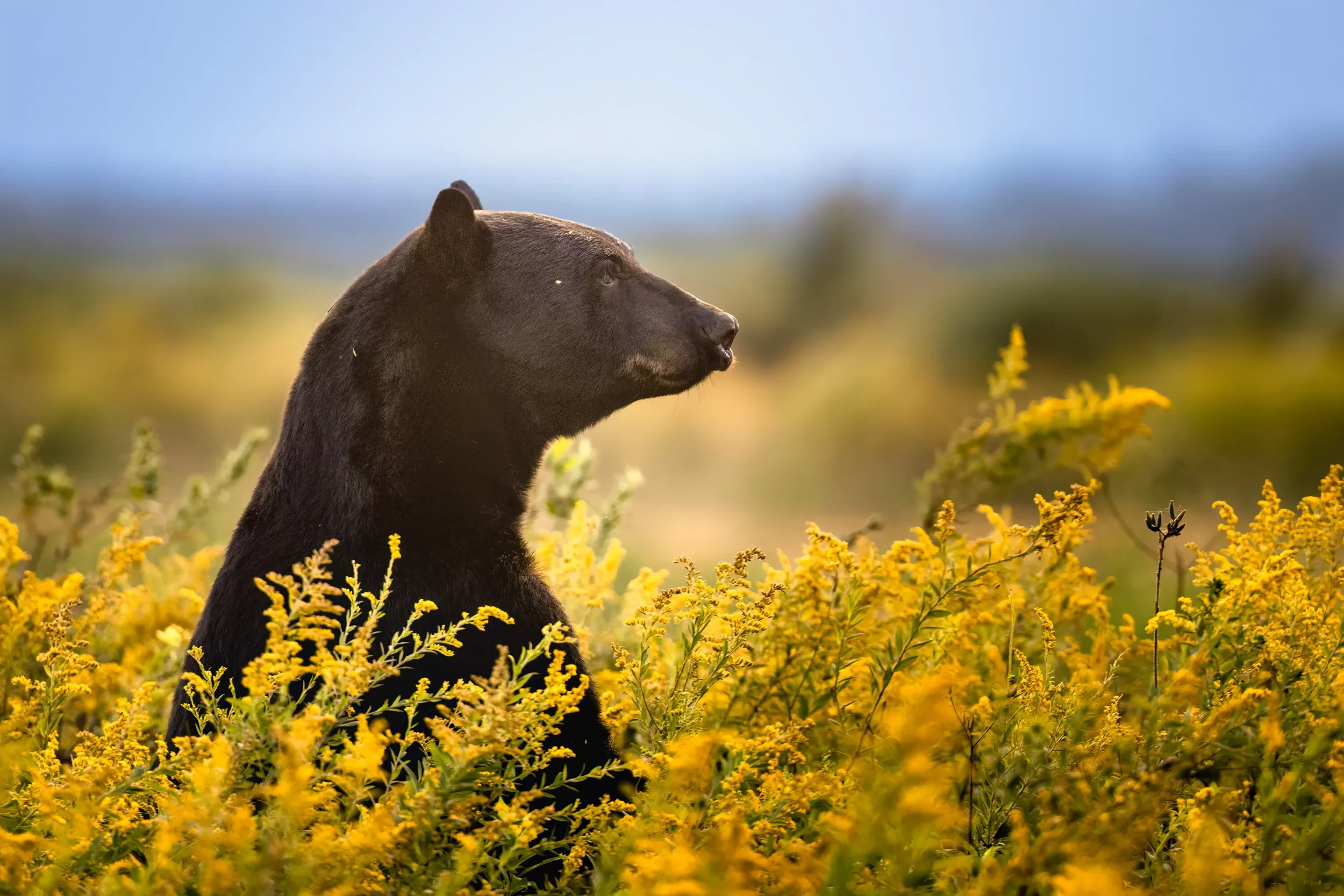
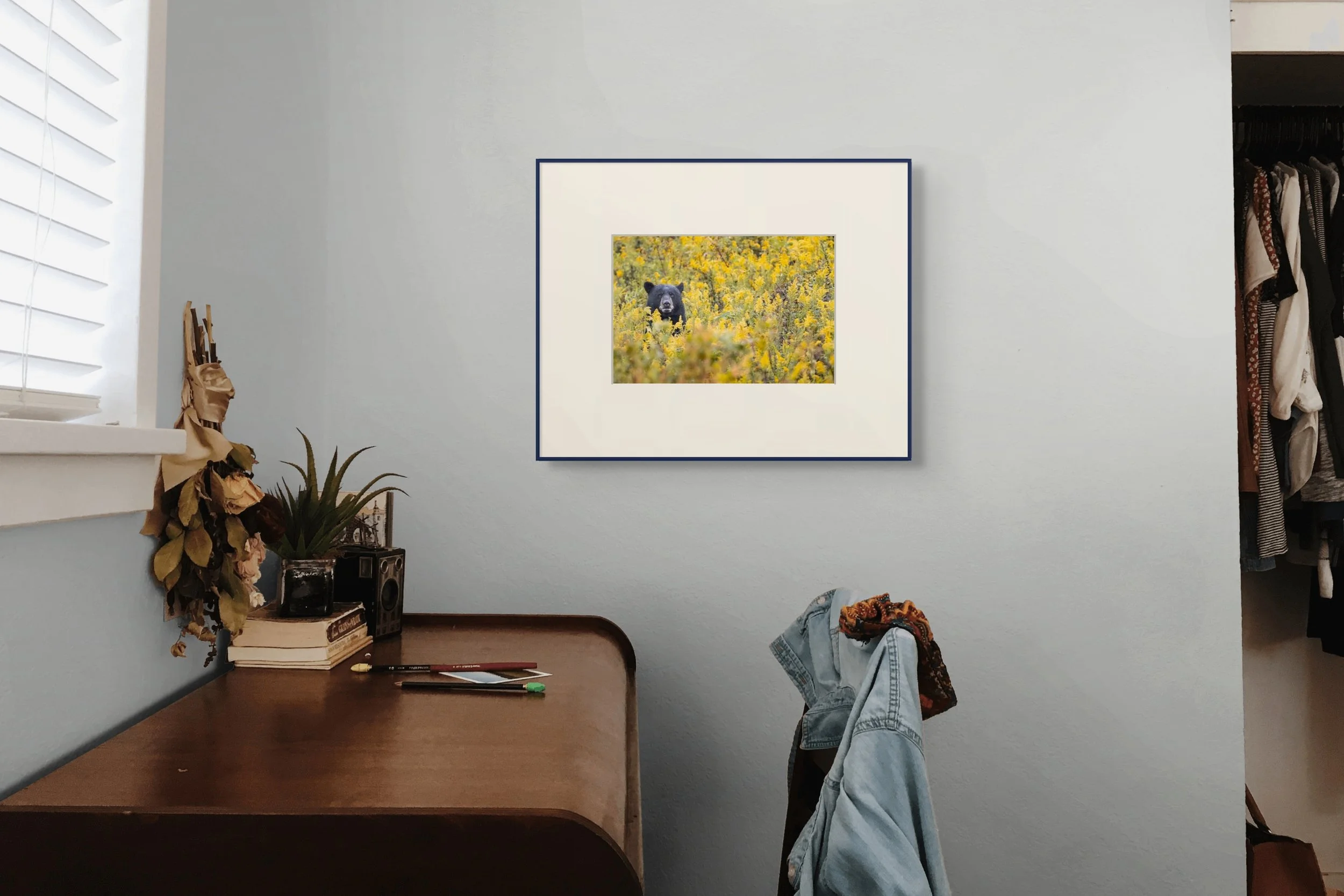
One image that felt like a turning point for me was Golden Meadow.
That photograph simplified the scene down to the bear, the goldenrod, and a clean, minimal background. It was not built around action. It was built around atmosphere, color, shape, and quiet presence.
Images like that helped me recognize the direction I wanted my work to move. I became less interested in photographs that only impressed and more interested in photographs that could stay with someone. I wanted the image to feel calming, peaceful, and intentional — not because it lacked energy, but because its energy was held in reserve.
That is a very different kind of strength.
Restraint and the Printed Photograph
Restraint also changes the way a photograph lives as a print.
A quieter image can transform a room without overpowering it. It gives the viewer space. It can be lived with over time. Instead of demanding attention every time someone walks past it, it invites a slower relationship.
That matters to me.
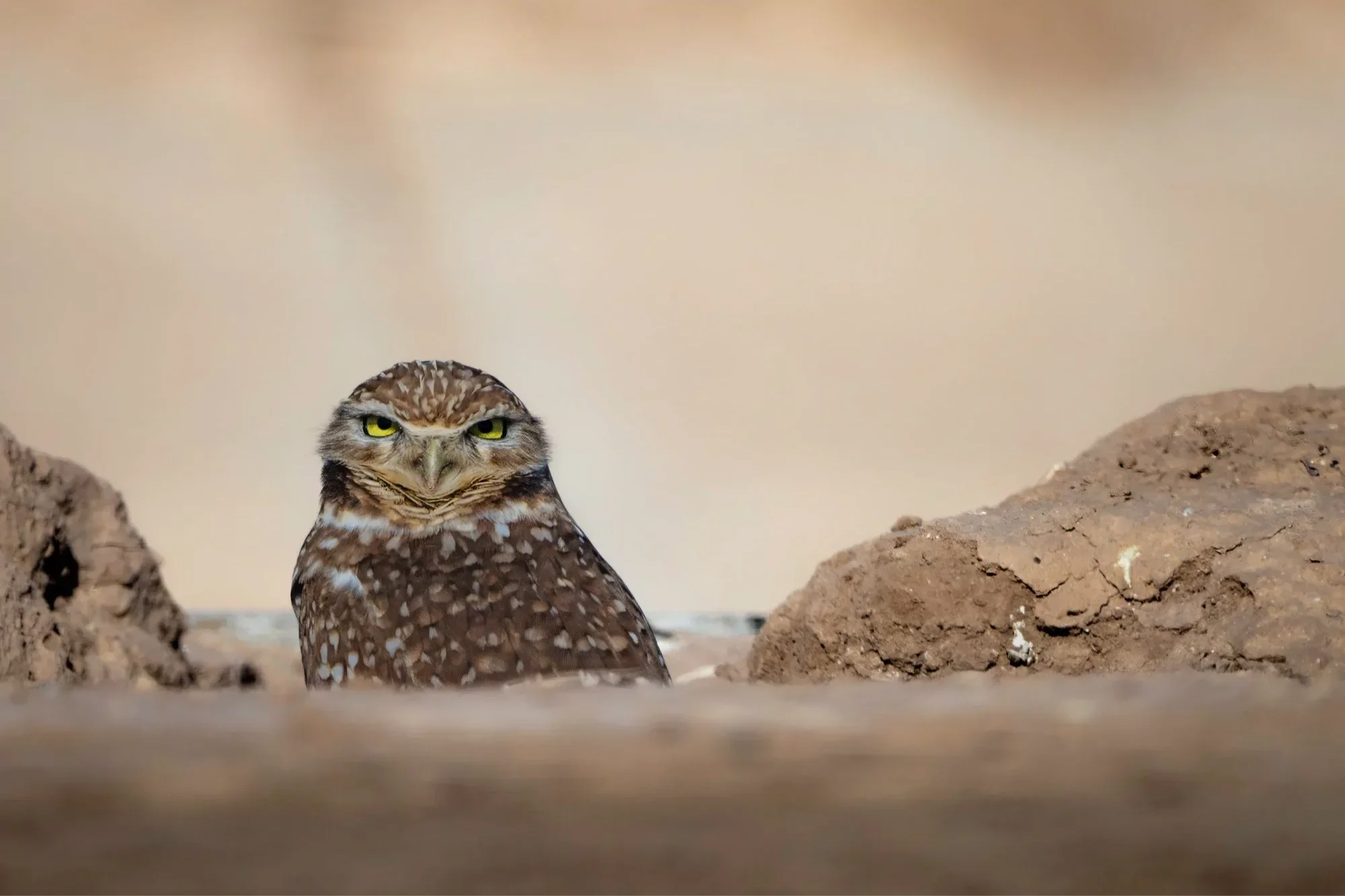
Many of the photographs I choose for limited edition collections are not the ones that create the strongest immediate reaction on a screen. I sit with images for a long time before deciding what belongs in a collection. I may photograph more than 100,000 images in a year, with the hope of finding only a small number that truly feel complete.
Some images are immediately readable, and I value those too. They often belong in my Small Works collection. But the images I return to most often — the ones that become part of my core body of work — are usually quieter. They reveal themselves slowly.
That slow reveal is part of what makes them worth printing.
Advice for Photographers
For photographers who want to make more expressive images, restraint does not mean abandoning drama or action entirely. It means becoming more honest about what you are actually drawn to.
For a long time, I think many of us chase the kinds of images we see others making. We assume we need more action, more color, more obvious impact. But those images may not reflect who we are or what we actually feel in the natural world.
At some point, I began making photographs that resonated more personally with me. They were not always flashy. They were not always dramatic. Often, they were calming and peaceful. Over time, I realized those qualities described not only the photographs I wanted to make, but also the way I wanted to experience nature.
That is where the work became more personal.
Learning restraint is really learning to trust your own eye. It is learning to recognize the small moments that keep calling you back. It is learning to make space for silence, atmosphere, and emotional weight.
Most of all, it is learning that a photograph does not have to be loud to be powerful.
Sometimes the quietest image is the one that stays.
Featured Works Mentioned
Golden Meadow
Tiny Guardian
Recent Posts from the Quiet Wild


Learning to photograph with restraint is the practice of looking beyond the obvious image. For Dave Miller, it means simplifying the scene, honoring quiet moments, and creating photographs that hold atmosphere, emotion, and intention. This reflective essay explores how restraint shapes his approach to wildlife and nature photography, from ethical fieldcraft and quieter compositions to painterly light, weather, and the discipline of knowing when an image is finished.