

Designing Peaceful Spaces with Nature Photography
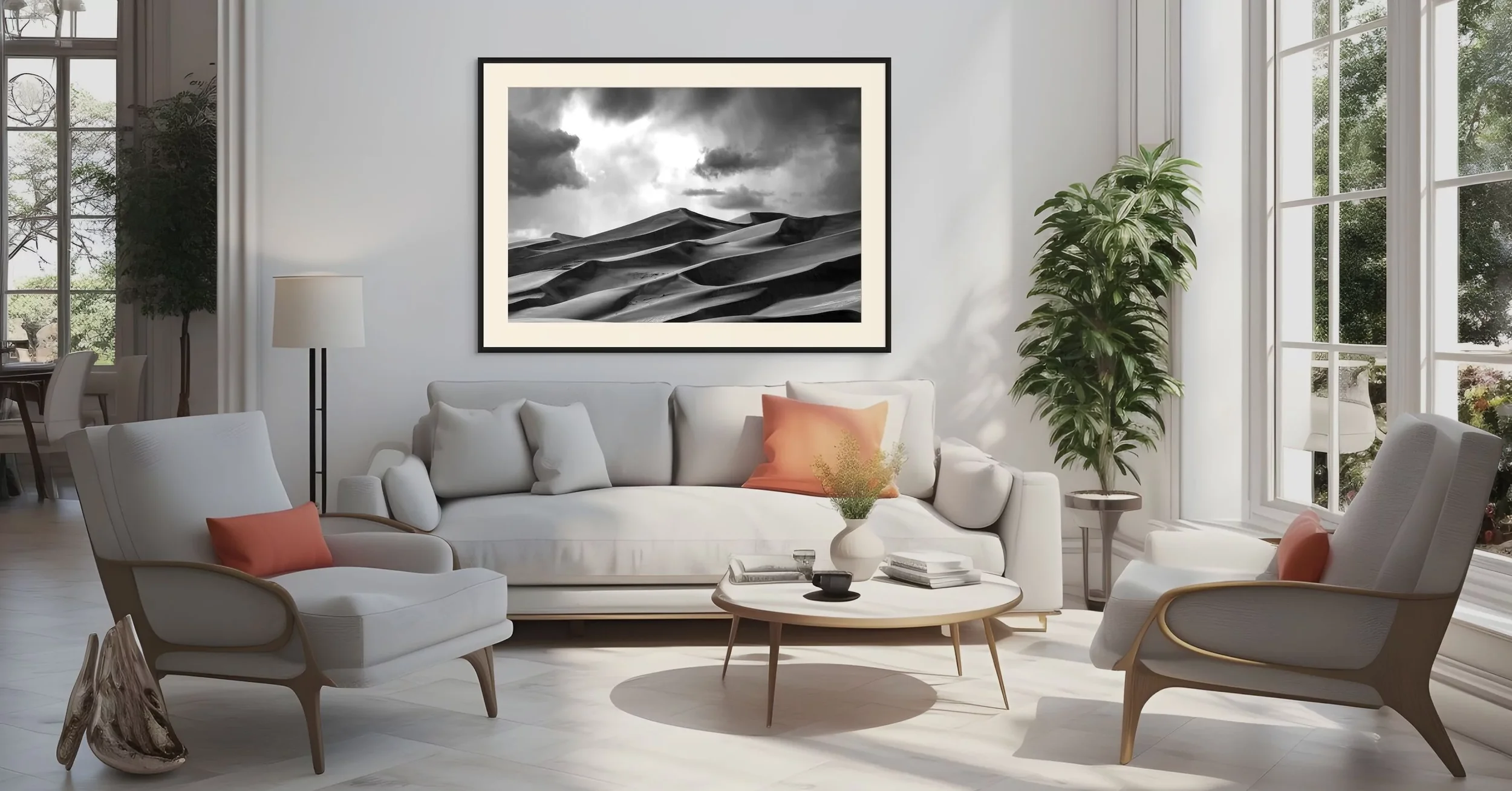
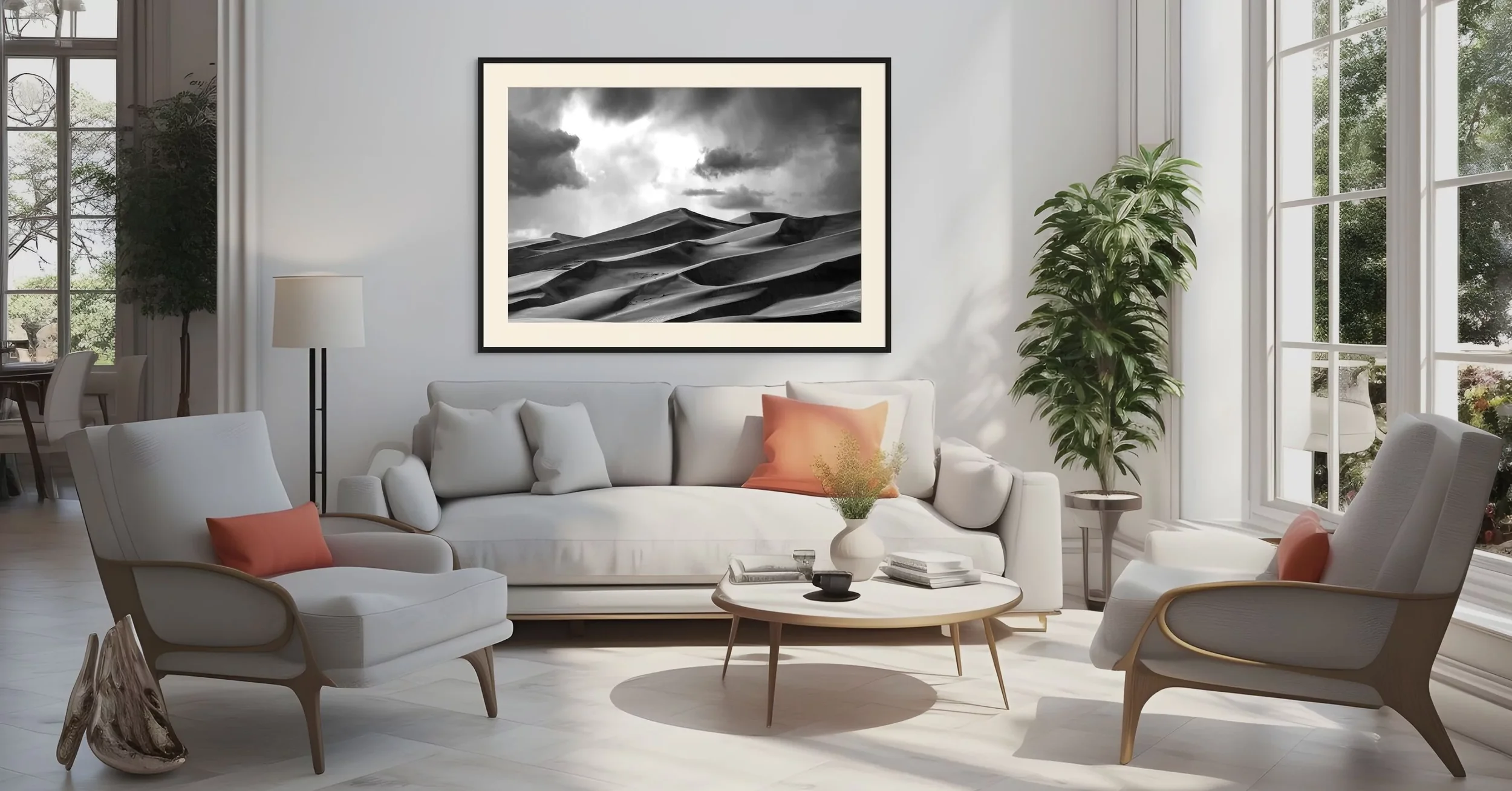
Shifting Silence - Great Sand Dunes National Park, Colorado
There’s a reason people instinctively turn toward nature when they need stillness.
A quiet forest trail. Soft morning fog over a mountain valley. The muted tones of wildlife moving through rain or snow. These moments slow us down in ways that modern life rarely allows.
For many collectors, that’s what nature photography becomes inside a home — not simply decoration, but atmosphere.
The right image can soften a room, quiet visual noise, and create a sense of emotional breathing room within a space. Over time, it becomes less about “wall art” and more about how a room feels to live in.
Why Nature Photography Creates Calm
Not all artwork affects a space the same way.
Bright, high-energy imagery can create stimulation and movement. In contrast, quieter nature photography often creates emotional balance. Atmospheric landscapes, restrained color palettes, and intimate wildlife moments invite the eye to slow down rather than constantly search for attention.
That sense of calm is one reason nature artwork is increasingly used not only in homes, but also in offices, healthcare environments, retreat spaces, and hospitality interiors.
The most successful peaceful interiors often share a few common elements:
Soft tonal transitions rather than harsh contrast
Organic textures and natural materials
Visual simplicity and compositional breathing room
Artwork that feels reflective instead of performative
In many ways, the artwork becomes the emotional anchor of the room.
Choosing the Right Nature Photography for Your Space
The most effective nature artwork usually aligns with how a space is meant to feel.
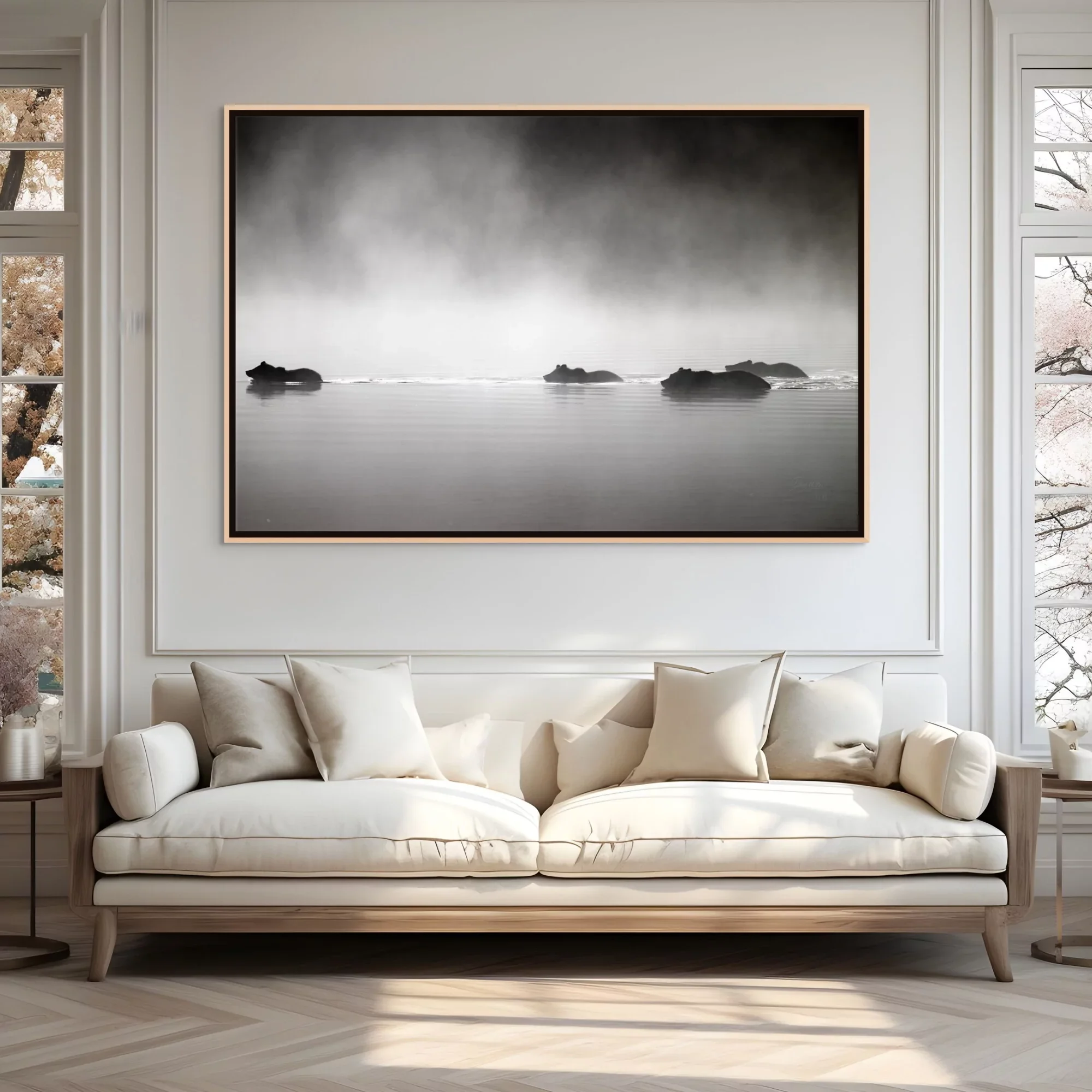
Living Rooms & Shared Spaces
For gathering spaces, larger atmospheric landscapes or environmental wildlife portraits often work best. These images create presence without overwhelming the room.
Mountain scenes, fog, snow, forests, and expansive western landscapes tend to create openness and quiet structure within a shared environment.
Images with restrained color palettes often integrate more naturally into modern interiors than highly saturated artwork.
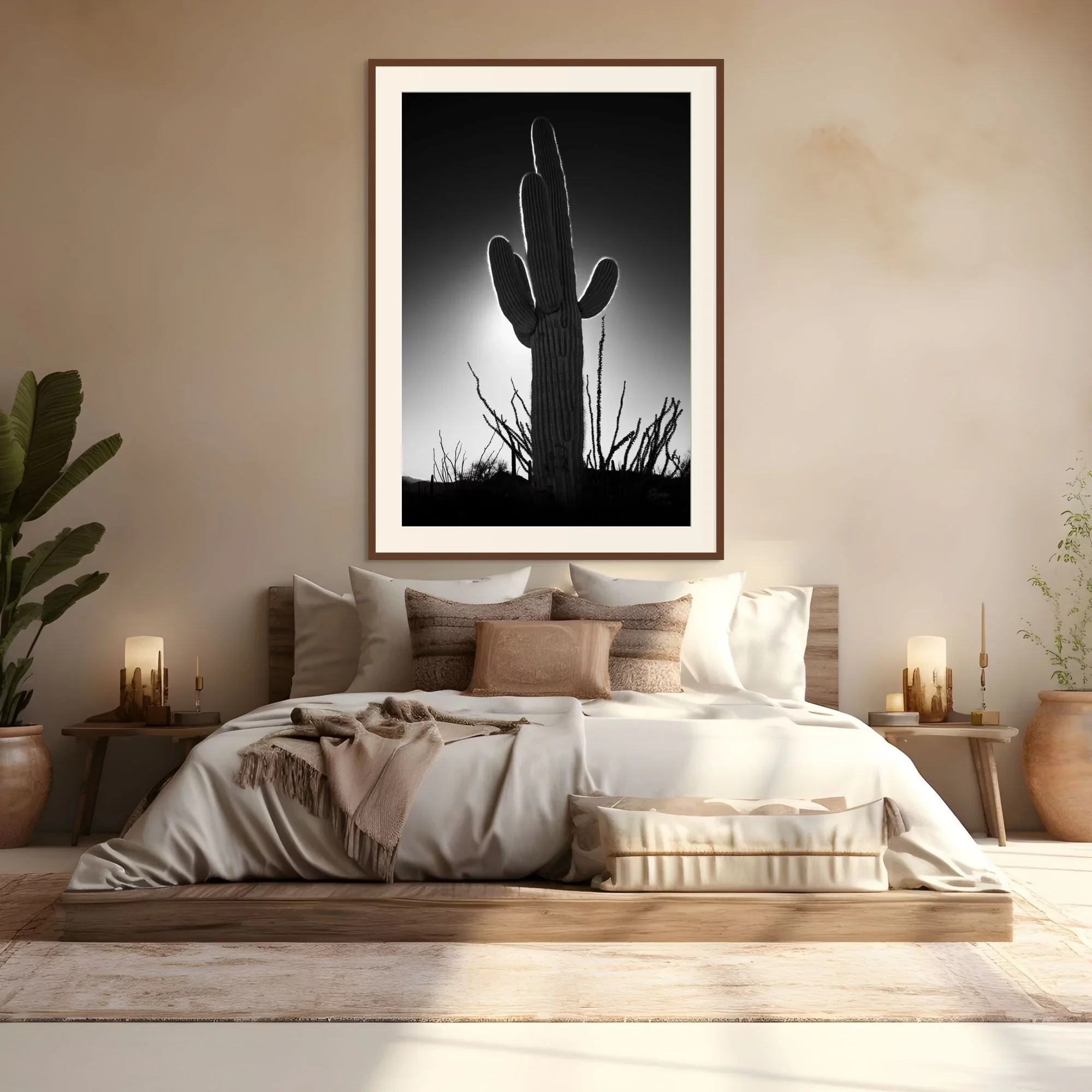
Bedrooms & Quiet Retreats
Bedrooms benefit from softer imagery with emotional subtlety.
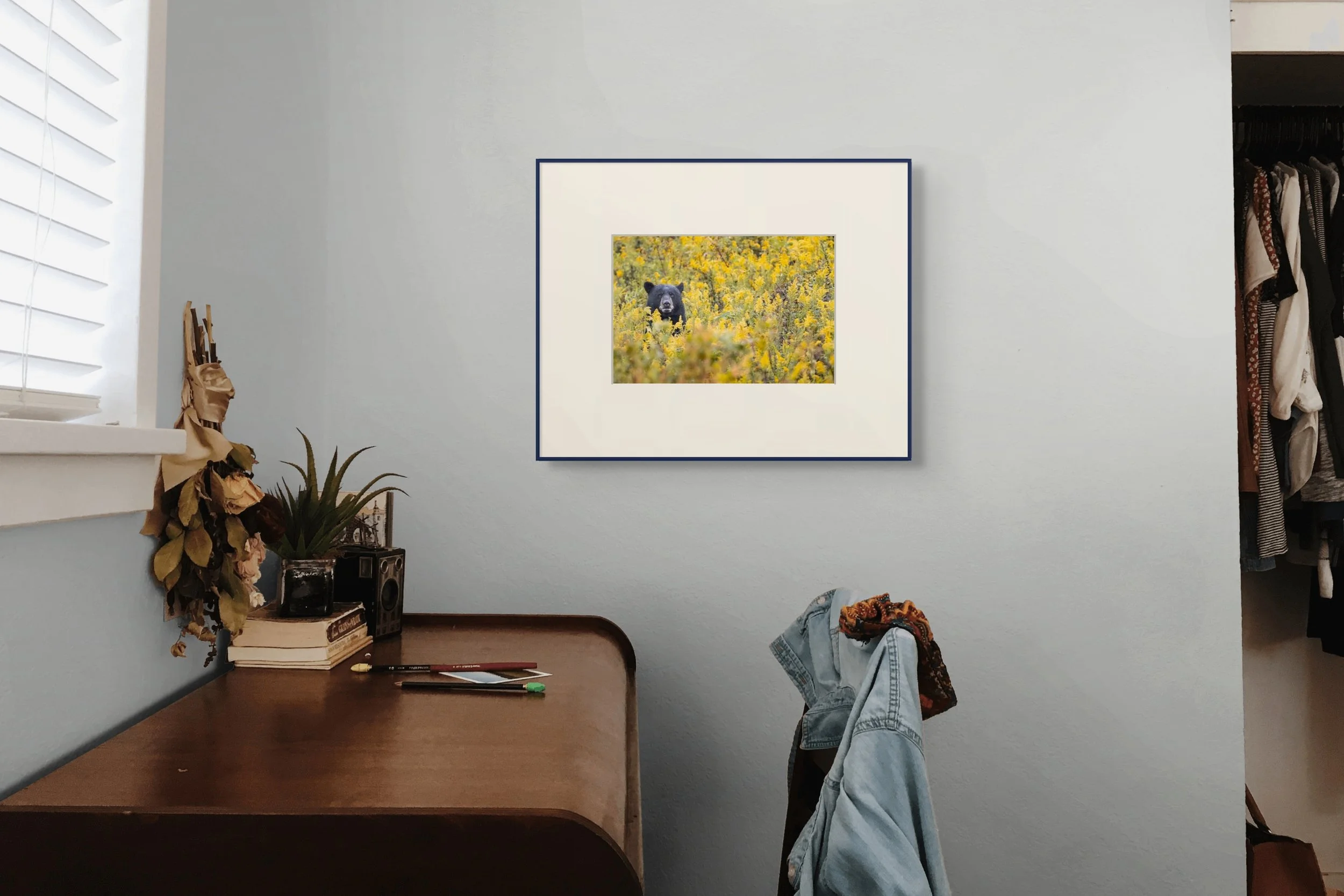
Gentle wildlife portraits, muted forest scenes, snowfall, mist, and intimate moments in nature help reinforce a sense of restfulness. Artwork in these spaces should feel calming rather than visually demanding.
Smaller framed pieces can often feel more personal and contemplative than oversized statement works in these environments.
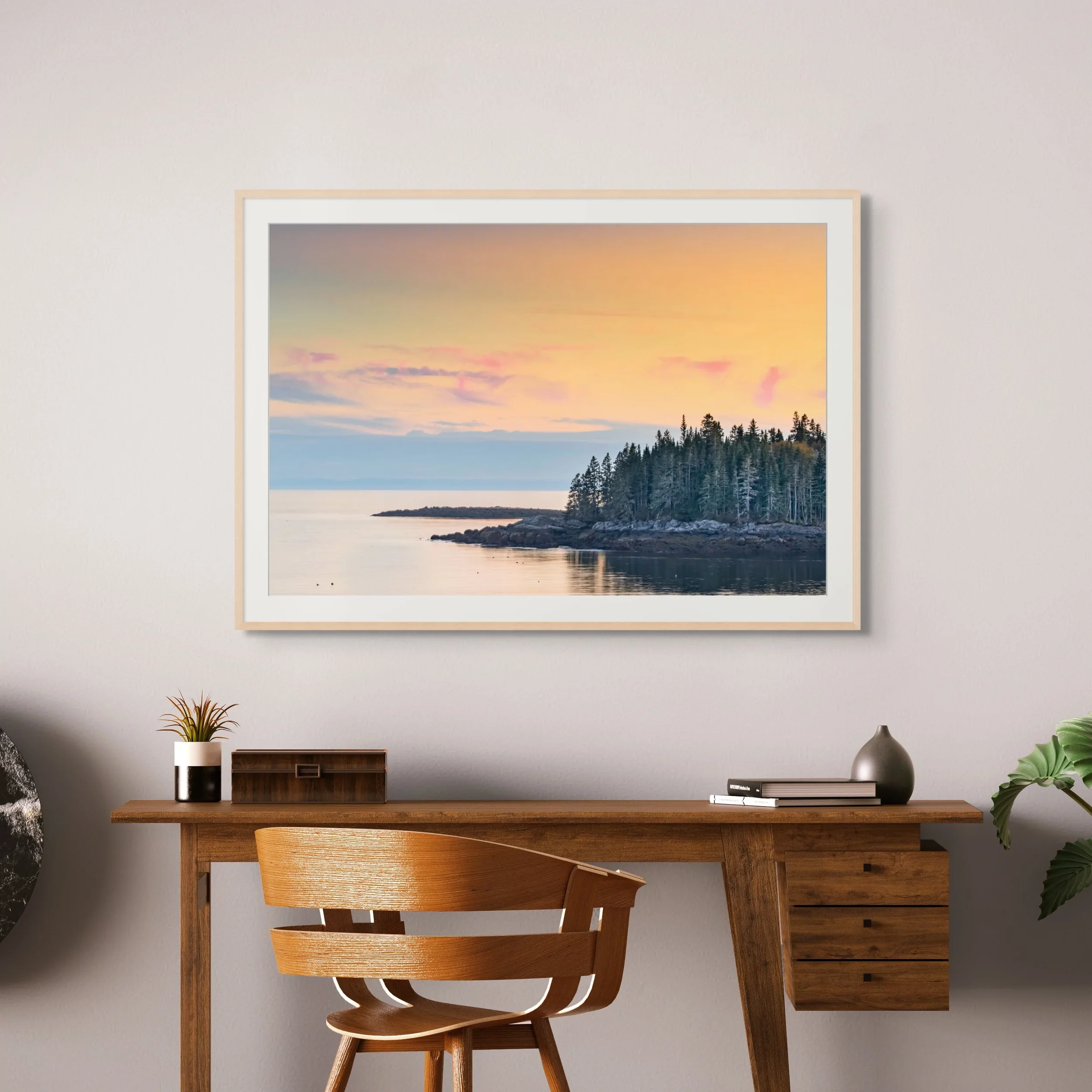
Offices & Creative Spaces
Nature photography can also reduce the sterile feeling many workspaces develop.
Photographs that incorporate atmosphere, distance, weather, or quiet wildlife moments help create visual separation from screens and artificial environments.
For offices, many collectors gravitate toward:
Black and white landscapes
Minimal compositions
Mountain imagery
Wildlife images with strong negative space
Soft earth tones and subdued color palettes
These types of pieces tend to feel grounding without becoming distracting.
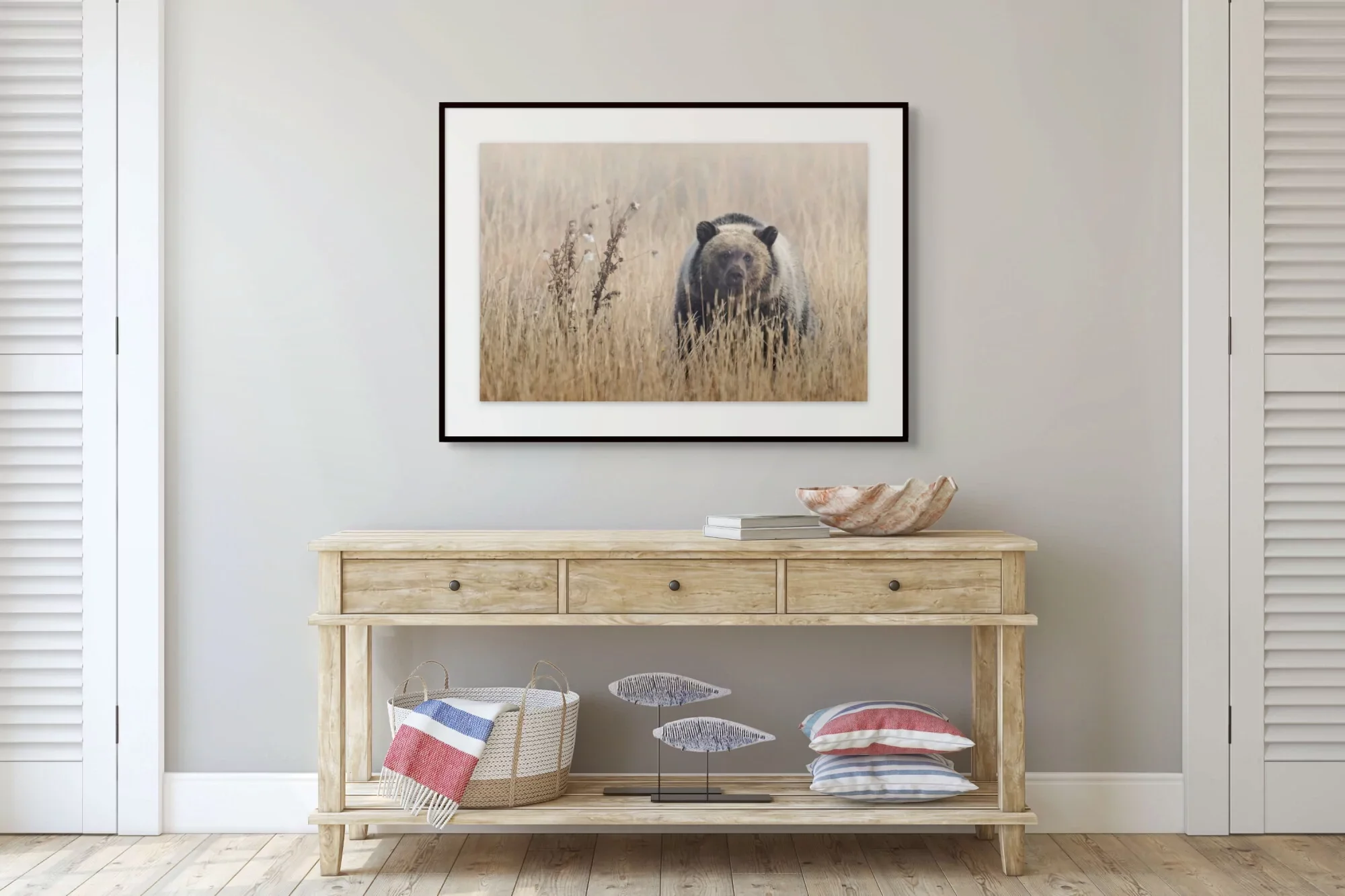
Framed Fine Art Prints and Natural Presentation
Presentation matters just as much as the image itself.
Natural wood frames, archival fine art paper, soft matte textures, and clean white matting often complement peaceful interiors better than glossy or highly reflective finishes.
The goal is usually integration rather than visual dominance.
Fine art paper prints, especially those with subtle texture and softer tonal rendering, tend to create a more organic and timeless feeling within a room. Over time, many collectors find they feel more connected to these quieter presentations than highly commercial finishes.
The framing becomes part of the atmosphere.
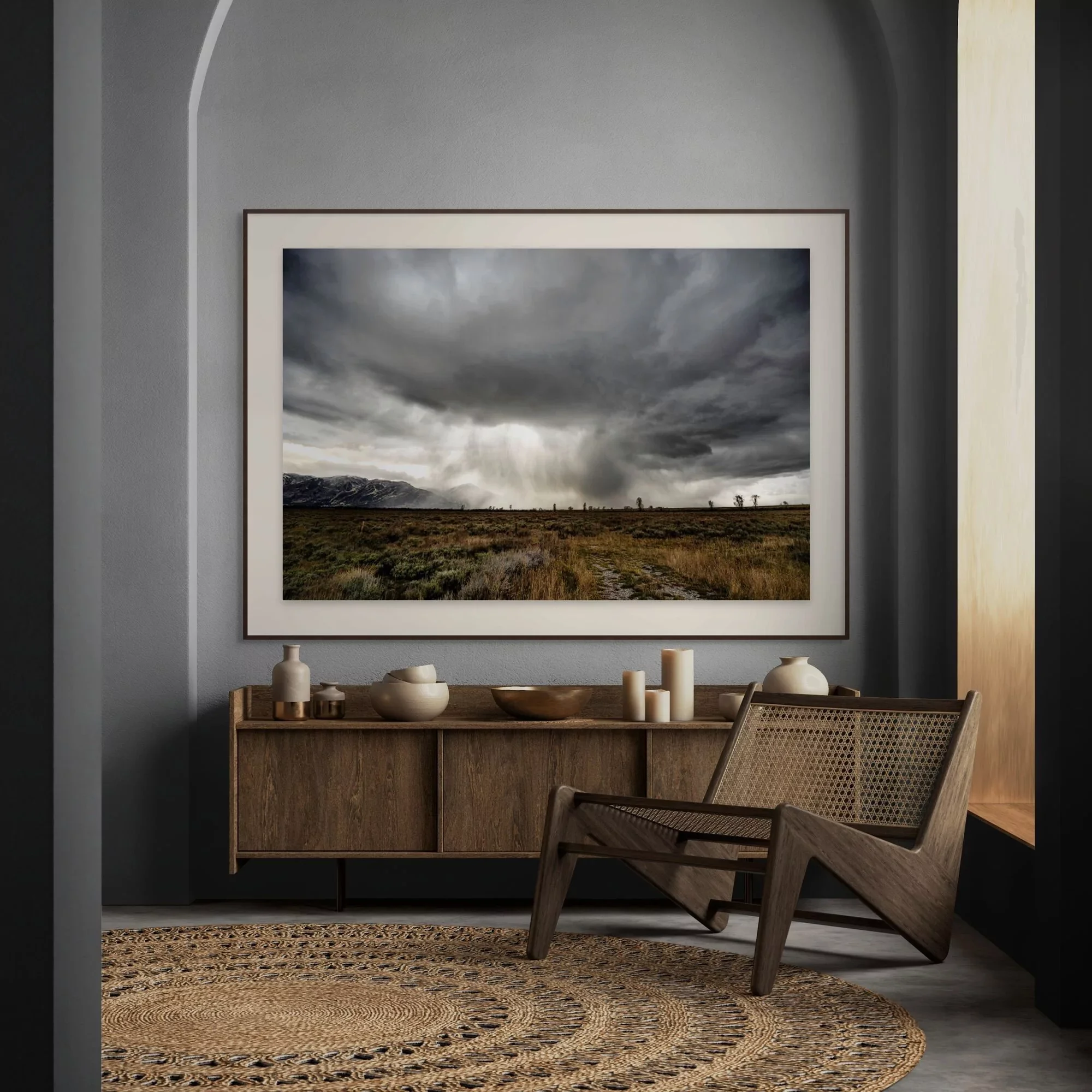
Designing with Emotion, Not Just Color
Many people choose artwork based only on matching a room’s color palette.
But the strongest interiors are often built around emotional tone instead.
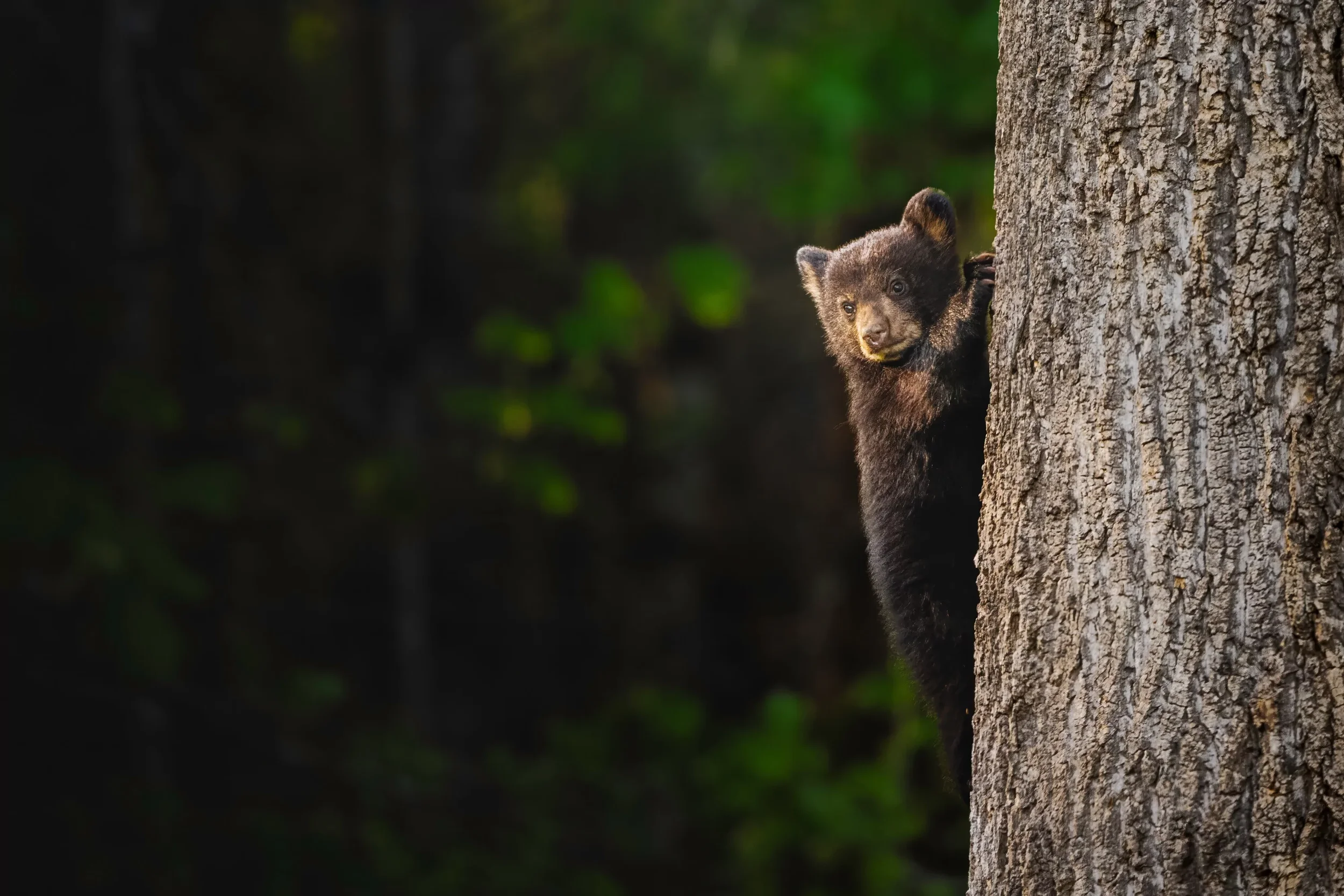
A photograph of a black bear moving quietly through spring rain may create a feeling of stillness and introspection. A storm gathering over distant mountains may create reflection and scale. A small wildlife moment framed simply can create warmth and intimacy.
These emotional responses matter more than perfect color coordination.
The artwork people continue to live with for years is usually the work that changes how a space feels emotionally.
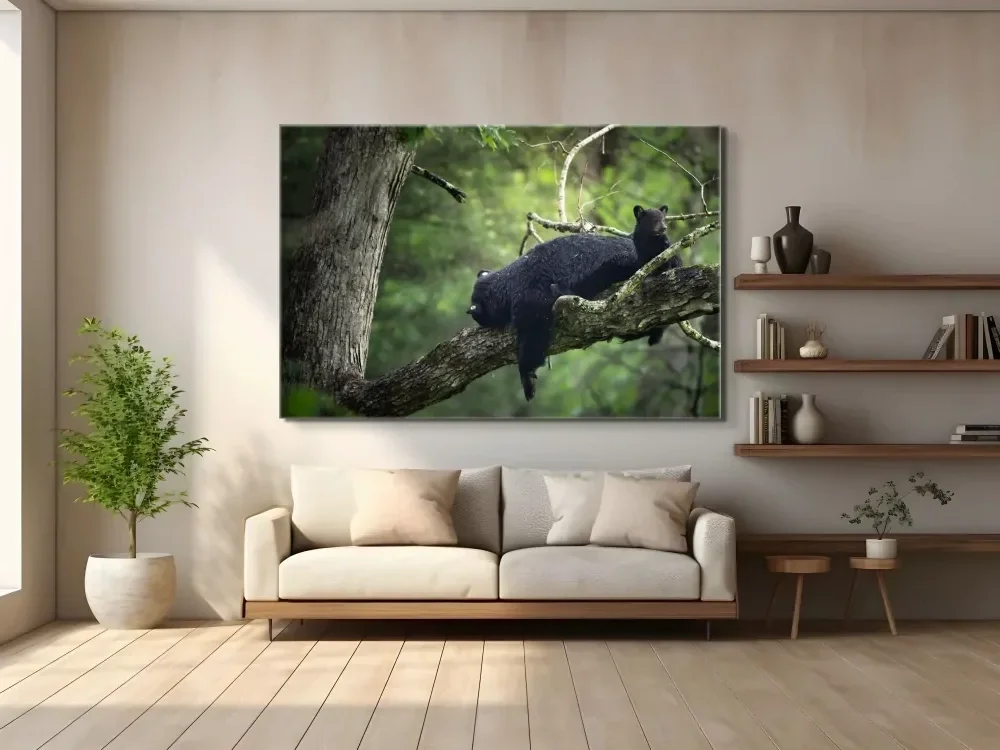
Bringing the Natural World Indoors
In increasingly digital and fast-moving environments, many people are searching for ways to create spaces that feel quieter, slower, and more connected to the natural world.
Nature photography can help create that atmosphere.
Not through spectacle or visual intensity, but through subtlety.
The goal isn’t simply to fill a wall. It’s to create a room that feels restorative to spend time in.
That may be the quietest form of luxury there is.
Explore related Collections
Quiet Giants — Atmospheric wildlife portraits and intimate encounters
Quiet Earth — Expansive landscapes shaped by weather, light, and solitude
Small Works: Moments in the Wild — Smaller works centered around quiet wildlife moments
You can also explore the full collection of fine art wildlife photography prints designed for peaceful interiors and nature-inspired spaces.
Latest from the Quiet Wild


Learning to photograph with restraint is the practice of looking beyond the obvious image. For Dave Miller, it means simplifying the scene, honoring quiet moments, and creating photographs that hold atmosphere, emotion, and intention. This reflective essay explores how restraint shapes his approach to wildlife and nature photography, from ethical fieldcraft and quieter compositions to painterly light, weather, and the discipline of knowing when an image is finished.