
Field Note: Desert Sentinel
Opening Moment
The Sonoran Desert wasn't what I expected.
Like many people, I arrived carrying a certain idea of what a desert should be. Harsh. Empty. Quiet. A landscape defined more by absence than abundance.
What I found instead was life.
Birdsong drifted through the morning air. Ocotillo reached skyward from rocky hillsides. Saguaros stood across the landscape in every direction, some towering above the desert floor like ancient monuments while others gathered in dense clusters stretching toward the horizon.
It was February in southern Arizona, and I had spent several days exploring the edges of Saguaro National Park looking for compositions that captured something of what made the landscape feel so unique.
Not simply the cactus themselves.
But their presence.
One morning, I found what I had been searching for.
The Encounter
I wasn't wandering aimlessly when I found this scene.
I had a fairly specific photograph in mind.
The challenge was finding a saguaro that could be isolated from the surrounding landscape. Despite how this image appears, the desert here is not empty at all. The terrain is filled with saguaros, ocotillo, shrubs, and countless other plants competing for space and sunlight.
Finding simplicity takes work.
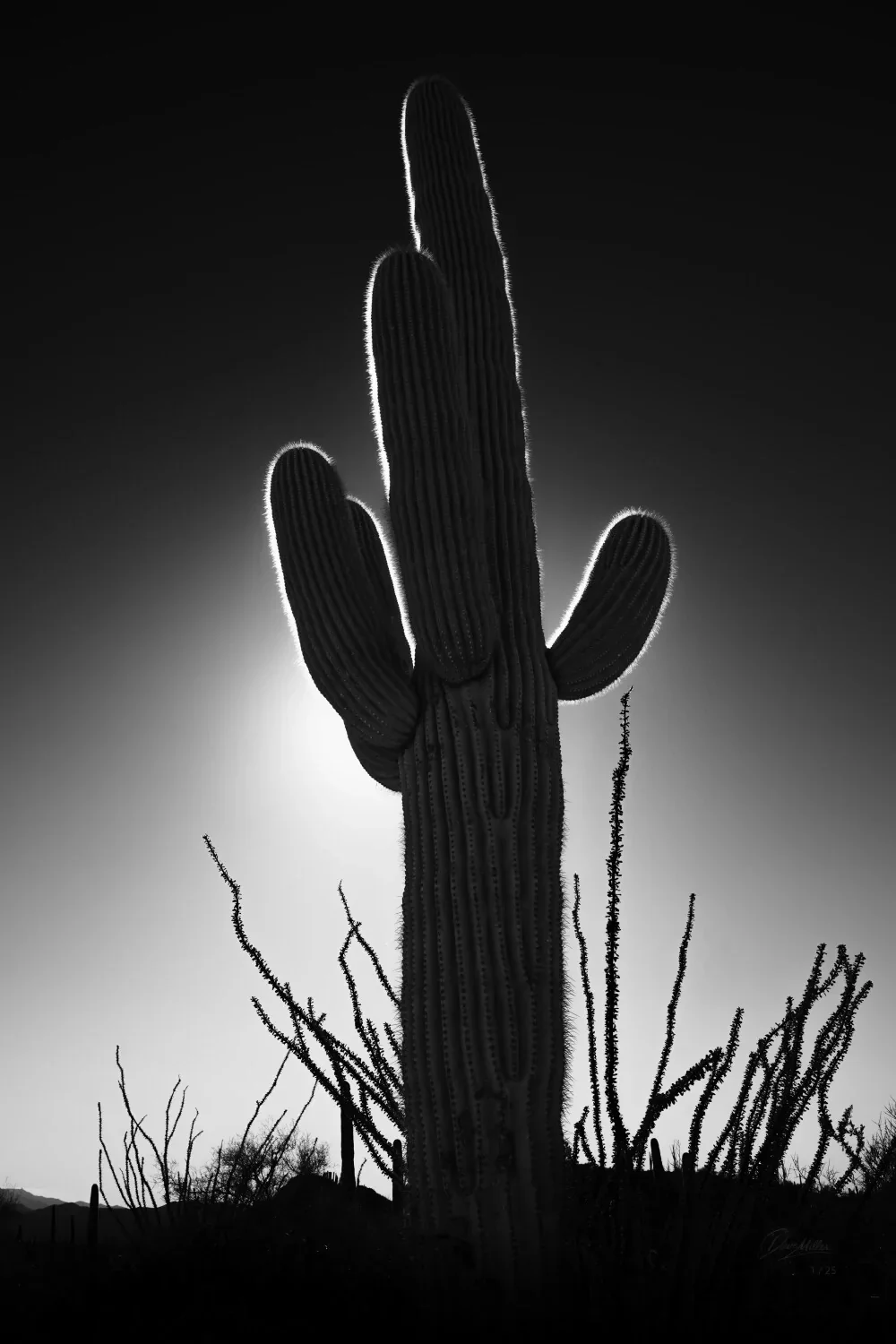
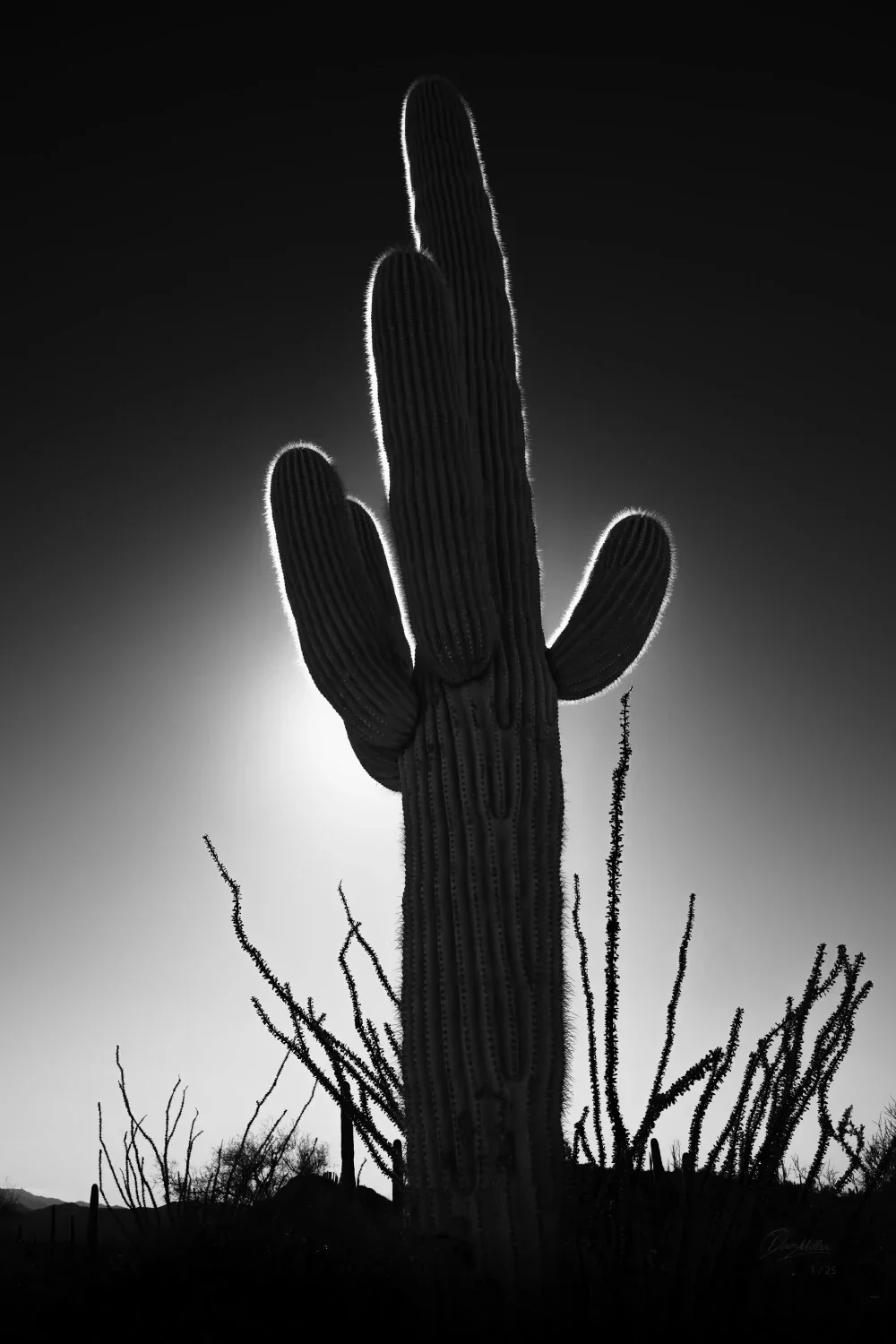
This particular cactus stood slightly above the surrounding terrain, which allowed me to position myself below it and photograph upward toward the sky. As I explored different angles, I realized there was an opportunity to place the rising sun directly behind the cactus.
Immediately, the image began to reveal itself.
The strong backlighting created a luminous halo around the edges of the saguaro while the cactus itself fell into silhouette. It wasn't a composition I found instantly. It required moving carefully, adjusting position, and refining the alignment until the shape, light, and background all worked together.
Once everything came together, I knew exactly what kind of photograph it wanted to become.
What Drew Me to the Scene
The silhouette was what initially attracted me.
The halo was what made me stay.
From the moment the sun aligned behind the cactus, the photograph stopped being about detail and became about shape, contrast, and presence. The individual textures of the saguaro became less important than its overall form.
The simplicity felt powerful.
The smaller desert plants, particularly the ocotillo, became supporting characters within the composition. They help anchor the scene and provide context, but their role is secondary. Everything in the frame ultimately leads back to the saguaro itself.
The title Desert Sentinel came later.
As I spent time with the image, the cactus increasingly felt like a guardian standing watch over the surrounding landscape. Not because it was isolated in reality, but because the composition intentionally created that impression.
In truth, the desert around it was full of life.
Birds moved through the area. Other plants filled the landscape. The saguaro itself served as part of a much larger ecosystem supporting countless species.
But in the photograph, it stands alone.
And that contrast became part of the story.
Behind the Image
Desert Sentinel was photographed near Saguaro National Park in Arizona during February 2025.
The image was created mid-morning, a time when I would normally avoid photographing landscapes. By that point in the day, the desert sun can create harsh contrast and difficult shadows. On this morning, however, those conditions became an advantage.
The photograph relied entirely on backlighting.
Using a fast shutter speed and neutral density filters, I positioned the rising sun directly behind the cactus, allowing the strong light to create the glowing rim that defines the image. The exposure was intentionally built around preserving that halo while allowing the body of the saguaro to fall into darkness.
I knew immediately the image would become black and white.
The scene depended on tonal contrast rather than color. Removing color simplified the image even further and emphasized the relationship between light and form.
The resulting photograph became less about a specific cactus and more about an idea.
A presence within the landscape.
Featured Collection
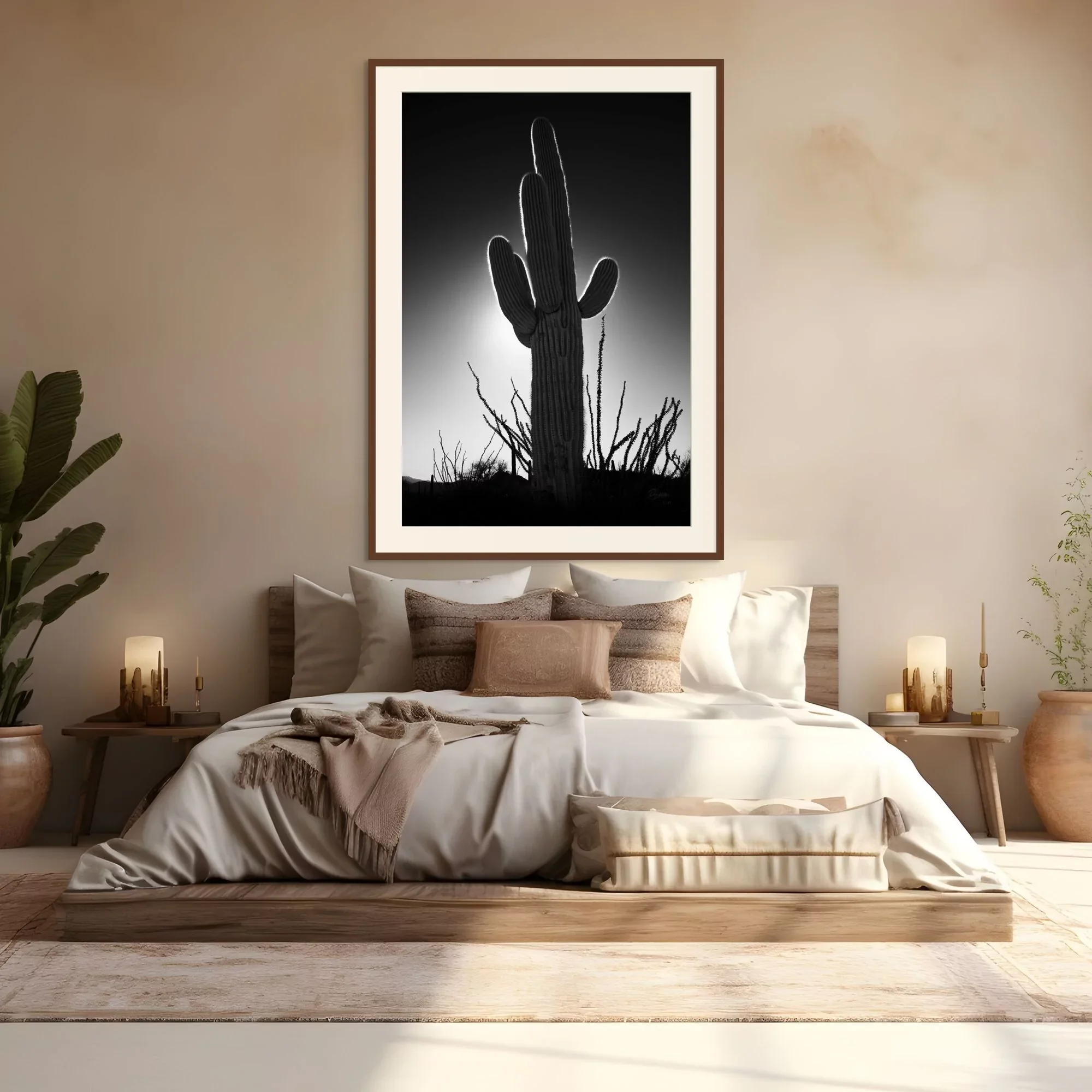
Desert Sentinel is part of the Quiet Earth collection — a body of work exploring atmosphere, presence, and the quieter emotional character of the natural world.
These images are less concerned with dramatic moments and more interested in the enduring qualities of wild places. Weather, silence, light, and landscape become subjects in their own right.
The collection reflects a simple belief: that nature often reveals its greatest beauty not through spectacle, but through presence.
Explore the Quiet Earth collection to view additional fine art landscape photography inspired by the deserts, mountains, forests, and wild places of North America.
Closing Reflection
When I look at Desert Sentinel now, I don't see a harsh landscape.
I see resilience.
The image presents the desert as stark and solitary, but my experience there felt very different. The Sonoran Desert was full of life, movement, and activity. Every plant, bird, and animal seemed to have found its place within an environment many people assume is empty.
There's something encouraging about that.
Nature has a remarkable ability to thrive in places that appear inhospitable.
The saguaro has become a symbol of that idea for me.
Patient.
Enduring.
Deeply rooted.
A reminder that beauty often exists where we least expect to find it.
And that life has a way of flourishing, even in the most unlikely places.
Recent Field Notes
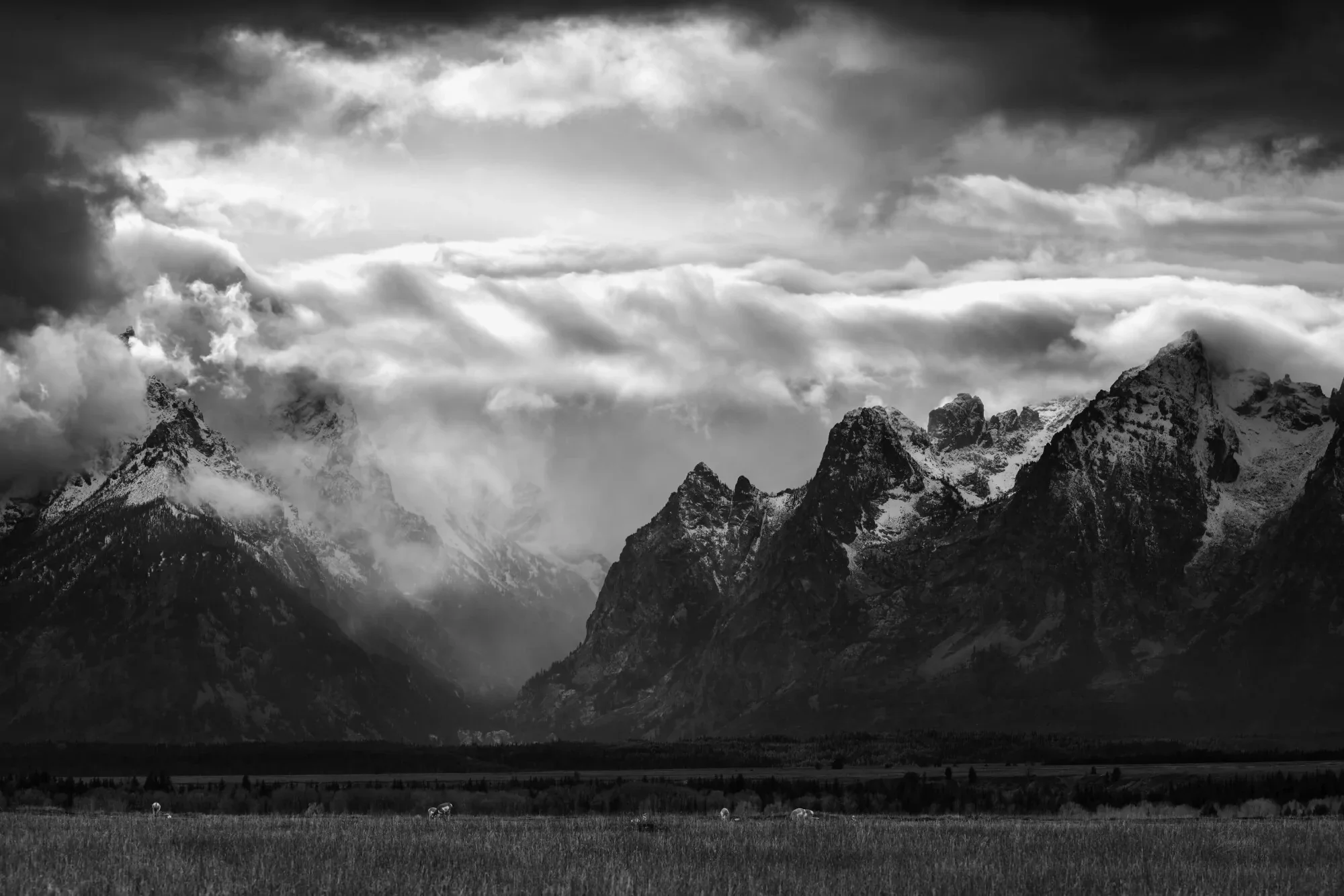


A young black bear cub pauses alone in the tall grass of Cades Cove as spring begins to give way to summer in the Smokies.
“Emerging” became a photograph about transition, independence, and the quiet moments wildlife photography can reveal if we slow down enough to notice them.